Mounjaro Nutrition: Food Ideas and Practical Support
Quick answer: If you are a beginner looking for protein goals on Mounjaro, start by making a tolerable protein food part of each meal or snack, spread intake across the day, and pair food with gradual resistance exercise. You do not need to force one very large serving. A palm-sized portion of fish, poultry, lean meat, eggs, tofu, tempeh, Greek yogurt, cottage cheese, beans, or lentils is a practical visual starting point. Your exact protein target depends on body size, health conditions, activity, kidney function, appetite, and the rest of your diet, so a clinician or registered dietitian should individualize it.
Mounjaro can change appetite, fullness, and gastrointestinal comfort. Those effects may make a calorie deficit easier to create, but they can also make it easy to under-eat without noticing. A protein plan should therefore be flexible enough to use on a normal day, a busy day, and a day when a full meal feels uncomfortable. The purpose is not to promise a specific rate of weight loss or prevent every change in lean mass. The purpose is to support strength, daily function, recovery, and a nutritious pattern that you can repeat.
What protein goals on Mounjaro for beginners should focus on
Beginners often ask for one number. A more useful first step is to establish a rhythm: include protein at breakfast, lunch, dinner, and one planned snack if your appetite allows. This spreads the work across the day and reduces the pressure to catch up at night. If you fill up quickly, eat the protein portion first, then return later for vegetables, fruit, grains, or potatoes.
Protein needs are not interchangeable between people. Someone with kidney disease, a history of kidney stones, liver disease, diabetes, pregnancy, an eating disorder, or a medically prescribed diet may need a different approach. Do not use a high-protein target from a social-media post or supplement label as a substitute for medical advice. The WeightMuse GLP-1 Nutrition hub offers broader meal-planning guidance, while the weight maintenance guide covers habits that can continue after an initial weight-loss phase.
Build each eating occasion around a protein anchor
Choose the main protein first, then add produce and a comfortable source of carbohydrate or fat. This simple order makes a small meal more nutrient-dense without requiring meticulous tracking. Examples include:
- Greek yogurt or cottage cheese with berries, oats, and seeds.
- Two eggs with beans, vegetables, and a slice of whole-grain toast.
- Chicken, fish, tofu, tempeh, or lean meat with cooked vegetables and rice or potatoes.
- Lentil or chickpea soup with yogurt, cheese, tofu, or a small whole-grain roll.
- Fortified soy milk blended with fruit and oats when a drink is easier than a solid meal.
A palm-sized serving is a visual starting point, not a required portion. Use smaller servings more often when appetite is low. If your meal contains several foods with protein, such as beans plus yogurt or tofu plus edamame, count the combination as one meal rather than trying to make every component large.
Animal and plant options can both fit
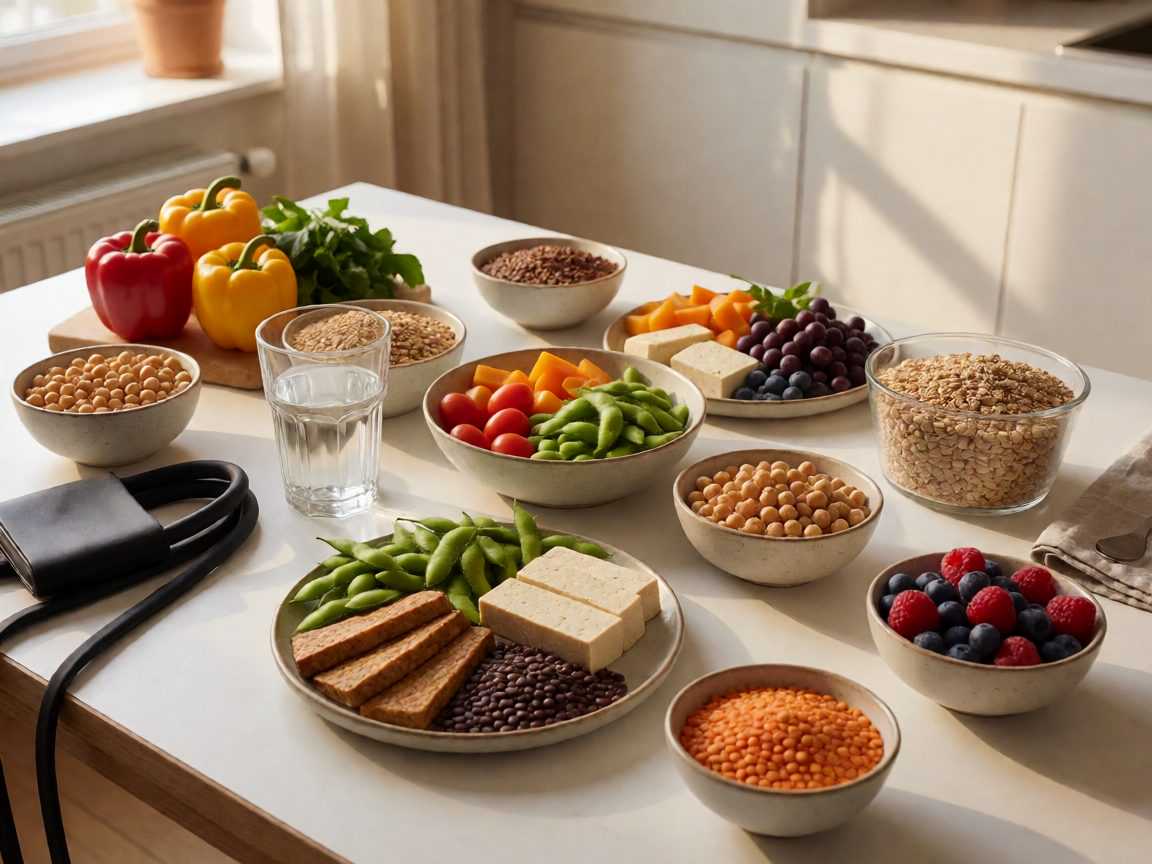
Fish, eggs, poultry, lean meat, dairy, tofu, tempeh, soy milk, beans, peas, and lentils can all contribute protein. Variety also makes it easier to cover other nutrients and prevents a plan from becoming boring. If you are vegetarian or vegan, keep convenient options ready: edamame, tofu, soy yogurt, lentil pouches, canned beans, hummus, and nuts or seeds in portions that fit your needs.
For a practical shopping structure, combine one fresh or frozen protein, one shelf-stable protein, one easy produce item, and one fiber-rich carbohydrate. Our protein and fiber foods hub can help you create combinations from foods you already tolerate. If you also need a broader grocery strategy, see the GLP-1 grocery-list example.
Use smaller meals when fullness arrives early
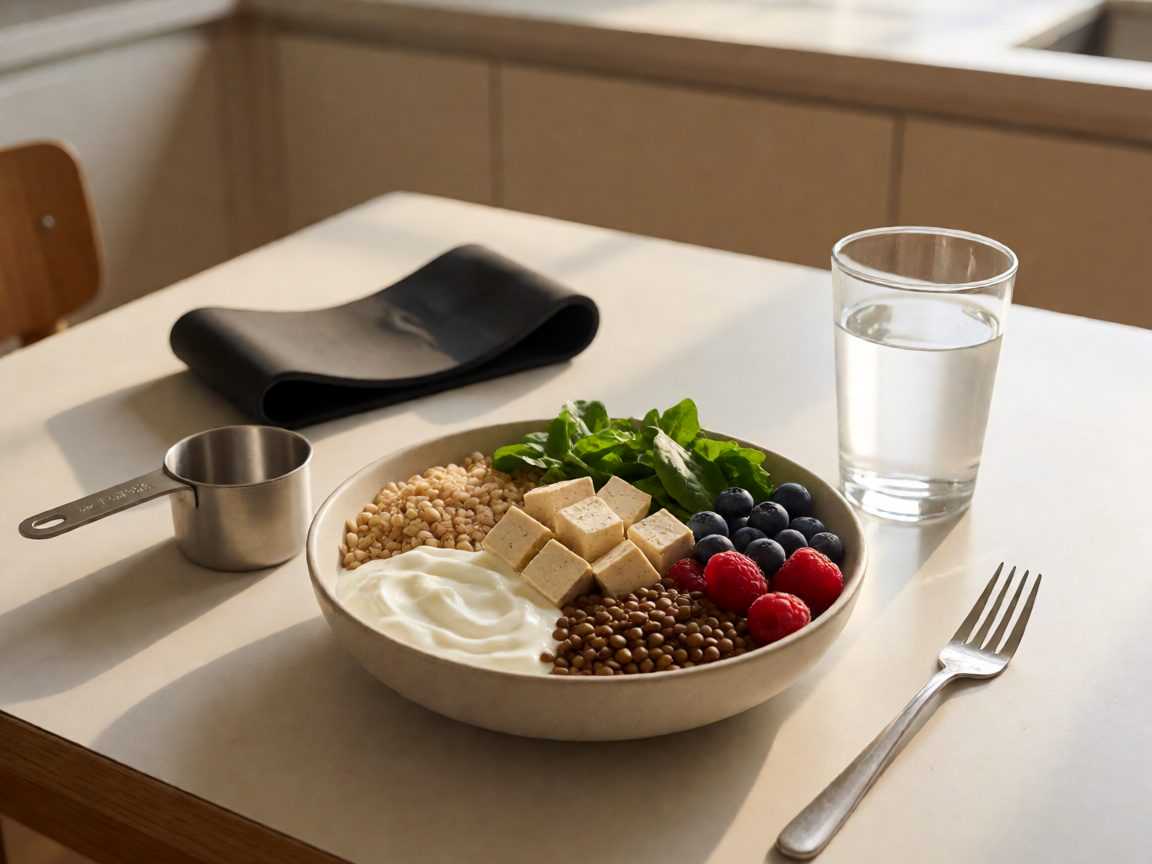
A large plate is not the only way to eat adequately. Divide a meal into two stages: have the protein and a small amount of produce first, then keep the rest for later. A yogurt cup, egg, tofu cubes, a small bowl of bean soup, or a clinician-approved shake can be a bridge on days when cooking feels like too much work.
Eat slowly, pause between bites, and stop when comfortably full. Some people tolerate cooked vegetables, soups, soft foods, or lower-fat meals more easily than rich or greasy dishes. Tolerance varies, so keep a short note of foods and portions that feel comfortable. If you have ongoing nausea, vomiting, abdominal pain, diarrhea, constipation, dizziness, or difficulty maintaining fluids, contact your prescriber rather than trying to solve the problem by adding supplements.
Pair protein with resistance training
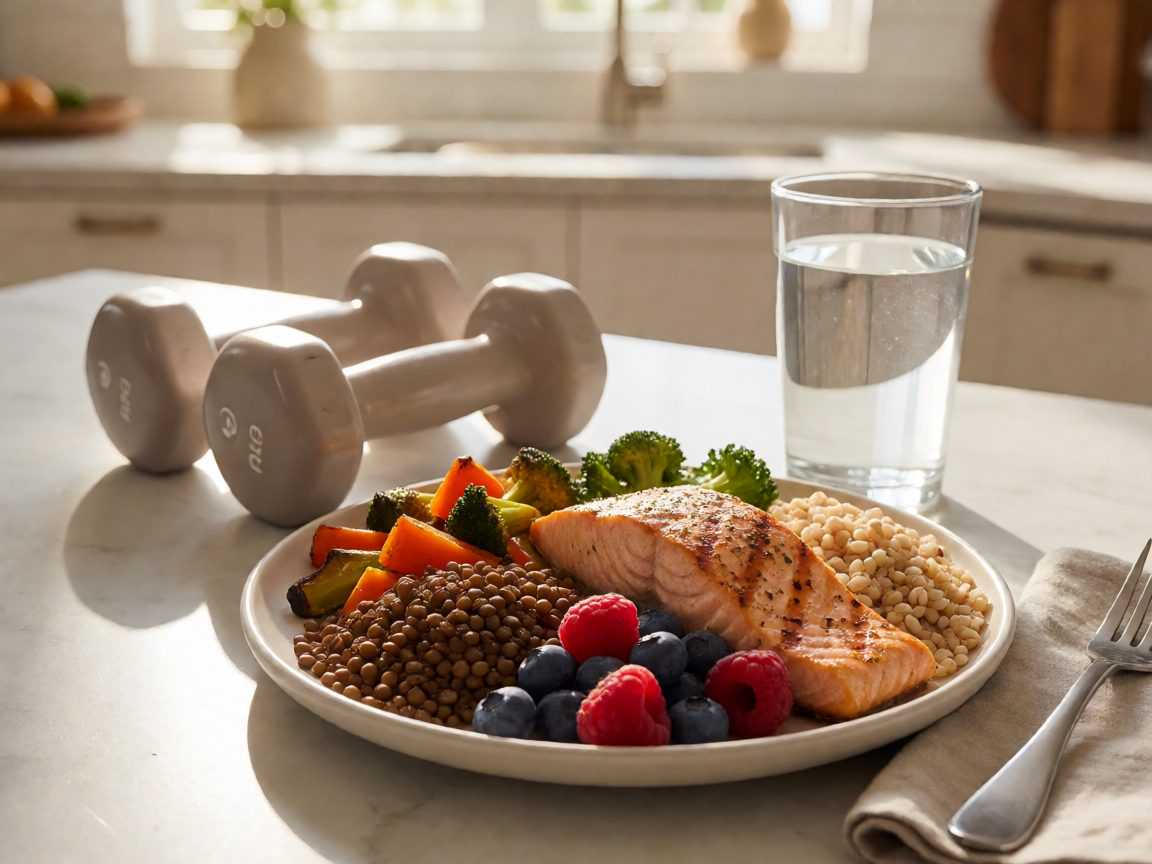
Food supplies building material, but muscles also respond to being challenged. The CDC’s adult activity guidance includes muscle-strengthening activity at least two days each week. The National Institute on Aging describes strength exercise as useful for maintaining existing strength, slowing loss of muscle mass, and supporting activities such as rising from a chair or carrying groceries. These are general guidelines, not a personal prescription.
Beginners can start with controlled, low-complexity movements: sit-to-stand from a stable chair, wall push-ups, a resistance-band row, a supported step-up, a hip hinge, or light hand weights. Use a range of motion you can control, breathe normally, and stop for pain, unusual breathlessness, chest symptoms, faintness, or loss of balance. When the movement feels easy and form remains steady, progress slowly by adding a repetition, a small amount of resistance, or another set.
People looking for strength training on Mounjaro for beginners often do best with two short full-body sessions that are easy to schedule. If you are a busy professional, a five- to ten-minute block can be a useful starting point before a longer session becomes realistic. A strength training on Mounjaro for women over 50 plan should consider bone health, joint history, balance, prior training, and any medical restrictions; age and sex alone do not determine the right exercise or load.
Make a busy-day version of your plan
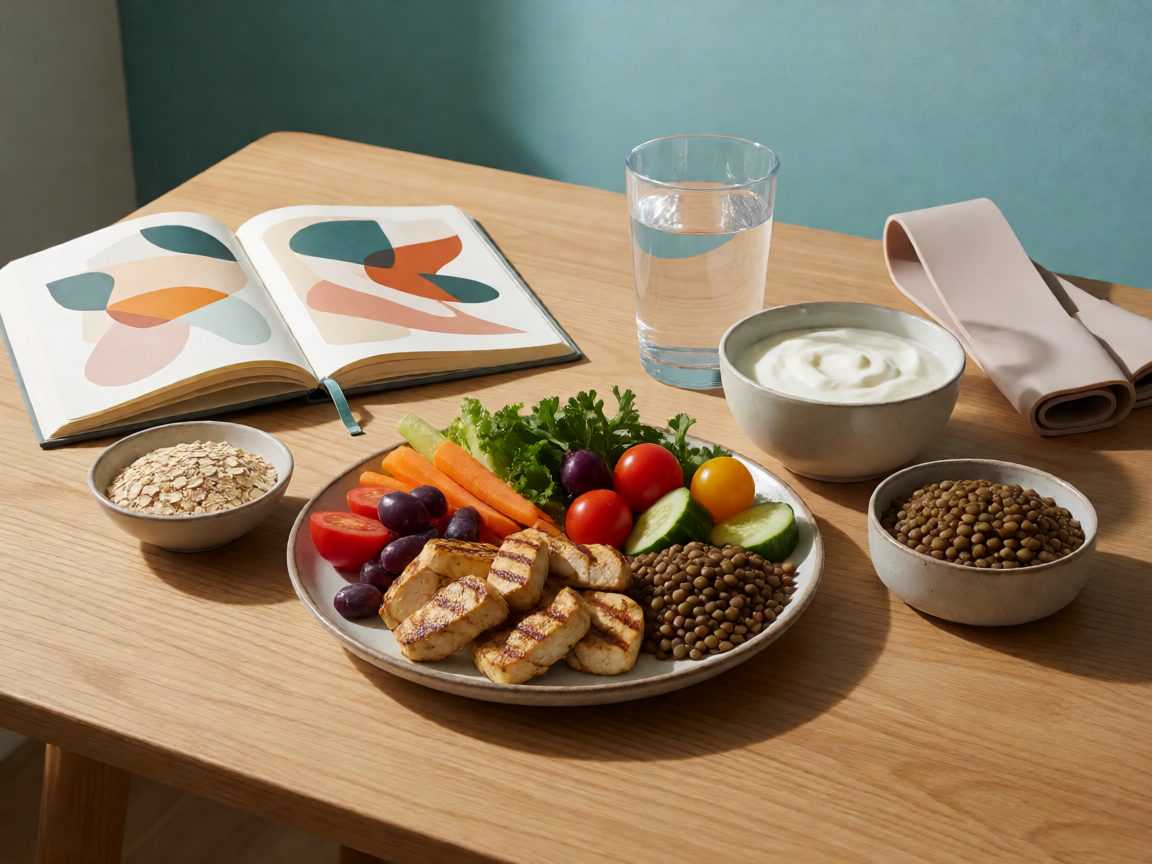
Planning for busy days prevents one missed meal from becoming a pattern of under-eating. Keep shelf-stable or refrigerated choices in more than one location: a yogurt or milk in the office, tuna or beans at home, tofu or eggs for a quick dinner, and fruit that can be eaten without preparation. If you commute, pack a small cooler with a protein food and a piece of produce.
A simple busy-day menu might be yogurt with oats in the morning, a bean-and-chicken or tofu bowl at lunch, and a smaller dinner of eggs or fish with cooked vegetables. If the afternoon meal is late, use a small snack rather than waiting until you are ravenous. The goal is a reliable fallback, not a perfect menu.
Do not turn protein into a protein-only diet
Protein is one part of a balanced pattern. Vegetables, fruit, legumes, oats, potatoes, and whole grains can provide fiber and carbohydrate for daily activity. Water and other appropriate fluids support hydration. Add fiber gradually if your digestion is sensitive, and follow medical advice if you have a fluid restriction or another condition that changes hydration needs.
Very restrictive eating can make it harder to fuel exercise and may worsen low appetite. Aim for meals that include protein plus at least one plant food when tolerated. A colorful soup, a bean-and-vegetable bowl, or yogurt with fruit can be more complete than repeatedly drinking a protein product by itself.
Supplements and shakes: useful tools, not requirements
A ready-to-drink shake or protein powder can be useful when chewing, cooking, or meal timing is difficult. Read the label for serving size, protein, added sugar, fiber, sodium, and ingredients that may upset your stomach. Introduce one product at a time and use the serving size that fits your appetite. Supplements should not replace most of your meals without a reason and professional guidance.
Food-first options may be enough for many people: yogurt, eggs, milk, tofu, fish, chicken, beans, lentils, and soy foods. If a supplement causes bloating, diarrhea, constipation, or nausea, stop and discuss alternatives with a clinician or dietitian. Do not assume that a higher number on a label is automatically better for you.
Track function, not only body weight
Once or twice a week, note whether ordinary tasks feel easier or harder, whether you can perform the same exercises with similar form, and whether you recover between sessions. Also note whether appetite is so low that regular meals are consistently difficult. Trends can provide a more useful signal than a single scale reading.
Unexpected or rapid weakness, repeated falls, persistent dizziness, fainting, inability to maintain fluids, severe abdominal pain, or ongoing vomiting deserves prompt medical attention. A healthcare professional may review medication, symptoms, medical history, intake, activity, and labs. A dietitian or physical therapist can personalize protein timing or exercise when general guidance is not enough.
A sample beginner day
This example shows structure, not a calorie prescription. Breakfast could be Greek yogurt or fortified soy yogurt with berries and oats. Lunch could be a small bowl with tofu or chicken, vegetables, and rice. A snack might be edamame, cottage cheese, fruit, or a clinician-approved shake. Dinner could be fish, beans, or eggs with cooked vegetables and a small portion of potatoes or another fiber-rich carbohydrate. If dinner feels too large, split it into two smaller servings.
Use the WeightMuse tools and trackers to organize a grocery list, meal pattern, or symptom note. You can also adapt the GLP-1 meal-prep guide for your schedule. The best plan is the one you can repeat while keeping meals comfortable and exercise safe.
FAQ
How much protein should a beginner eat on Mounjaro?
There is no universal number that is safe or necessary for everyone. Start with a protein food at each meal or snack you can tolerate, using a palm-sized visual portion as a starting point. Ask a clinician or registered dietitian to individualize the amount if you have medical conditions, low appetite, or a prescribed diet.
Can protein shakes prevent muscle loss?
No single food or drink can guarantee that outcome. A shake may help fill a gap when meals are difficult, but overall nourishment, resistance exercise, recovery, symptom management, and individualized care also matter.
What if I cannot eat a large meal?
Use smaller servings more often and prioritize the protein portion first. Yogurt, eggs, tofu, beans, soup, milk, or another soft option may be easier to tolerate. Persistent difficulty eating or drinking should be discussed with your prescriber.
Is strength training on Mounjaro for beginners safe?
It can be appropriate for many people, but no plan is universally safe. Begin below your maximum, use stable equipment, and ask a clinician or qualified exercise professional if you have heart, kidney, bone, joint, balance, or medication-related concerns.
Should I avoid carbohydrates while focusing on protein goals?
Not automatically. Beans, fruit, oats, potatoes, and whole grains can provide fiber and energy for activity. Choose portions that fit your health needs and digestion, and avoid overly restrictive eating unless it has been prescribed for you.
Health boundaries and sources
This article is general education, not medical diagnosis or treatment. It does not provide Mounjaro doses, promise a specific amount of weight or muscle change, or replace care from your prescriber. Review major nutrition and exercise changes with a healthcare professional, especially if you are pregnant, managing diabetes, have kidney disease, or have significant gastrointestinal symptoms.