Quick answer: Strength training on Wegovy for men over 50 should begin with a safe, repeatable routine and enough food and fluid to support recovery. Start with simple movements such as chair stands, wall push-ups, rows with a band, and supported hinges. Train the major movement patterns at a manageable effort, leave room to recover, and ask a clinician or qualified professional about modifications if you have heart, joint, balance, kidney, diabetes, or other health concerns. Wegovy is not a reason to force a particular workout or protein number.
Semaglutide can change appetite, meal size, and tolerance. Some people notice earlier fullness, nausea, constipation, or difficulty eating enough during a busy day. That makes a flexible plan more useful than a rigid one. The purpose of this guide is to help you connect strength training, practical meals, and symptom awareness. It is educational information, not a dose recommendation, diagnosis, or substitute for your prescriber’s instructions.
Why strength training matters after 50
Strength is useful for ordinary life: standing from a chair, carrying groceries, climbing stairs, getting up from the floor, and keeping balance while reaching. The National Institute on Aging explains that strength activities can help maintain existing strength, slow loss of muscle mass, and support mobility. Read its strength and physical activity guidance.
That does not mean a medication plus resistance exercise guarantees a particular body-composition outcome. Results vary with age, prior training, sleep, total food intake, health status, and the program itself. A useful success measure may be carrying a bag more easily, standing with less effort, or completing a session consistently—not only a change on the scale.
Three principles for a beginner
- Practice the movement: learn a comfortable range before adding load.
- Use moderate effort: finish a set feeling that you could still perform a few controlled repetitions.
- Progress slowly: change one variable at a time, such as repetitions, range of motion, or resistance.
The CDC’s adult physical-activity overview recommends muscle-strengthening activity on at least two days each week for adults. Treat that as a general public-health framework, not a demand to start there immediately. If you are new to exercise, one short session may be a sensible first step.
A simple full-body routine for strength training on Wegovy
Choose a stable chair, a wall or counter, and a resistance band or light weights if available. Keep the first sessions short enough that you can judge how your body responds. Warm up with easy walking, shoulder rolls, ankle movements, and several slow breaths.
Movement 1: chair stand
Stand up from a firm chair and sit down with control. Keep your feet stable and use your hands for support if needed. If the chair is low or the movement is difficult, use a higher surface or practice a partial rise. This pattern trains the legs and hips for an everyday task.
Movement 2: wall or counter push-up
Place your hands on a wall or sturdy counter, keep your body in a comfortable line, and bend your elbows slowly before pressing away. A more upright position is usually easier. Move to a lower surface only when the current version feels stable and pain-free.
Movement 3: supported row
Anchor a band according to its instructions, or use a light weight while supporting one hand on a bench or counter. Pull the elbow toward the ribs without shrugging. Keep the movement controlled rather than trying to lift the heaviest object available.
Movement 4: supported hip hinge
Hold a counter or the back of a chair, soften the knees, and move the hips slightly backward while keeping the spine comfortable. Return to standing by pressing through the feet. If you have back pain or uncertainty about the pattern, ask a professional for coaching.
Movement 5: calf raise and balance practice
Hold a stable support, rise onto the balls of the feet, and lower slowly. For balance, practice standing with one hand near the support rather than closing your eyes or standing on an unstable surface. Safety comes before difficulty.
Begin with a small number of controlled repetitions for each movement, rest as needed, and stop before your form deteriorates. A professional can help set the exact volume, especially if you have a history of falls, surgery, osteoporosis, neurological conditions, or significant joint pain.
How to progress without rushing
When a movement feels steady for several sessions, choose one small progression. You might add a repetition, use a slightly stronger band, increase the range of motion, or reduce the support. Avoid changing everything in the same week. Write down the movement, the version used, and how it felt afterward.
Recovery is part of the program. Leave time between challenging sessions, sleep as well as your circumstances allow, and include gentle walking or mobility work on other days if it feels good. Soreness that is mild and short-lived can happen when starting, but severe pain, swelling, unusual weakness, chest pressure, fainting, or breathlessness that is out of proportion to the activity needs medical attention.
Strength training on Wegovy for beginners may need extra flexibility around appetite. If you feel lightheaded because you have not eaten or drunk enough, stop the session and address the immediate issue. Do not use a workout to “earn” food or to compensate for a meal.
Food support: protein, fiber, and fluids
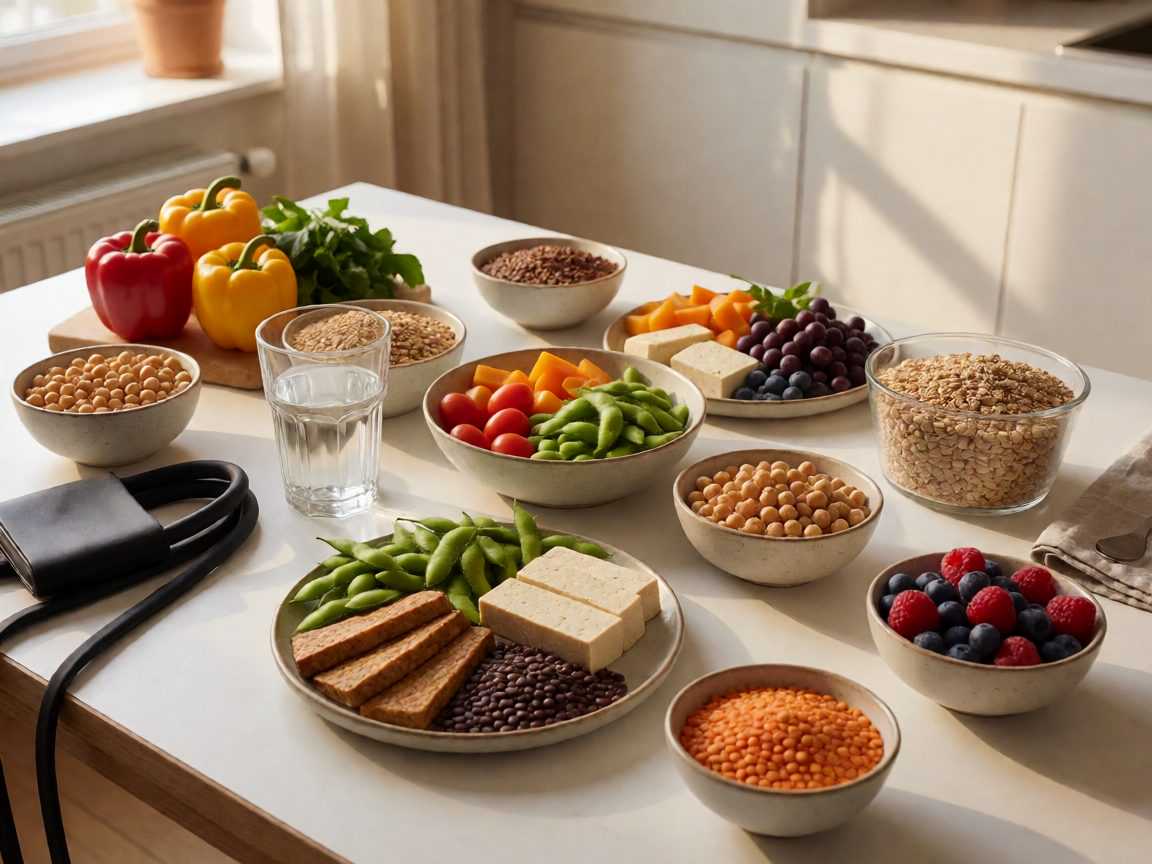
Men over 50 do not need a special internet protein number simply because they take Wegovy. A practical starting point is to include a protein-rich food at meals and spread intake across the day. Choose from fish, eggs, poultry, yogurt, cottage cheese, tofu, tempeh, beans, lentils, or other foods that suit your diet and tolerance.
Pair the protein with vegetables or fruit, a fiber-rich carbohydrate such as oats, potatoes, beans, or whole grains, and fluids. If large portions feel uncomfortable, use smaller servings more often. The National Institute on Aging’s meal-planning guidance emphasizes variety, hydration, and food choices from multiple groups.
Simple meal ideas
- Greek yogurt, berries, oats, and seeds.
- Eggs with spinach, whole-grain toast, and fruit.
- Salmon or chicken with cooked vegetables and a potato or rice.
- Lentil soup with yogurt, tofu, or another tolerated protein addition.
- Tofu or tempeh with vegetables and noodles or rice.
Our protein and fiber foods guide can help you create a short grocery list. For portable ideas, see this GLP-1 grocery list and the meal-prep guide for people in menopause on GLP-1. The food pattern is adaptable; the links are not an instruction to copy another person’s medical plan.

What to do on a low-appetite day
A low-appetite day calls for a smaller, easier plan—not a challenge to force a large meal. Try soft or moist foods, eat slowly, and keep an option available for later. Yogurt, eggs, tofu, soup, a small smoothie chosen with professional guidance, or a tender bean dish may be more approachable than a dry or very rich meal.
Keep fluids visible and sip regularly if that is comfortable. If nausea, vomiting, constipation, or diarrhea persists, ask your prescriber what to do. Do not automatically add electrolytes, laxatives, supplements, or a high-calorie shake without checking whether it is appropriate for your health history and medicines.
A training log can record sleep, appetite, symptoms, and perceived effort. Use the WeightMuse tools for pattern tracking if it feels supportive. Tracking should help you communicate with your care team, not become a source of guilt or compulsive restriction.
Health and medication boundaries
Wegovy is a prescription medicine with official warnings and prescribing information. The FDA’s Wegovy label should be reviewed with your prescriber. It is not a strength-training manual, and general exercise advice cannot determine whether your symptoms are medication-related.
Ask a qualified clinician before beginning or progressing exercise if you have uncontrolled blood pressure, chest symptoms, a recent operation, severe joint pain, a history of falls, significant kidney disease, diabetes treatment that can cause low blood sugar, or another condition that affects exercise safety. Stop and seek urgent help for chest pressure, severe shortness of breath, fainting, new neurological symptoms, or an acute injury.
Contact your care team about persistent vomiting, inability to keep fluids down, severe or ongoing abdominal pain, signs of dehydration, allergic symptoms, or an inability to maintain normal food and activity. Never change a dose, stop Wegovy, or take a supplement in order to reach a fitness goal without professional advice.
FAQ
Is strength training on Wegovy for men over 50 different from strength training for younger adults?
The movement patterns are similar, but starting point, recovery, balance, joint history, and other health conditions matter more than age alone. Use an individualized progression and prioritize stable equipment, controlled technique, and rest.
How often should a beginner train?
Many adults work toward muscle-strengthening activity on two days each week, but a beginner can start with less and build gradually. The right frequency depends on current fitness, recovery, symptoms, and medical advice. Consistency at a tolerable level is more useful than an aggressive schedule that you cannot maintain.
Should I train fasted if I have little appetite?
There is no universal reason to train fasted. If you feel weak, dizzy, or unable to exercise safely without food or fluids, pause and seek guidance. A small tolerated snack or meal may be more appropriate than pushing through discomfort.
Do I need a high-protein shake?
No. A shake is an option, not a requirement. Food can provide protein, fiber, and other nutrients. If you consistently cannot meet your needs through food, ask a clinician or dietitian whether a supplement is suitable, especially with kidney disease, allergies, or digestive symptoms.
Can I use this plan if I have knee arthritis?
Some movements may be adaptable, but pain, range of motion, and stability differ. A physical therapist or qualified professional can modify chair stands, step patterns, and lower-body loading. Do not continue through sharp or worsening pain.
How can I tell if the plan is helping?
Look for practical signals such as steadier technique, easier chair stands, improved confidence carrying groceries, better balance, or a routine you can repeat. Weight and body measurements are only some possible outcomes and should not be the sole measure of progress.
Bottom line
Strength training on Wegovy for men over 50 is best approached as a gradual skill: choose stable movements, use moderate effort, progress one step at a time, and support sessions with flexible meals, protein foods, fiber, and fluids. The phrase strength training on Wegovy for strength training beginners should not imply a one-size-fits-all routine. Your symptoms, medications, health conditions, and training history deserve attention.
For more context, browse the GLP-1 Nutrition hub, our vegetarian snack ideas, and the weight-maintenance guide. Build a plan that makes ordinary life easier and leaves enough room to adjust safely.