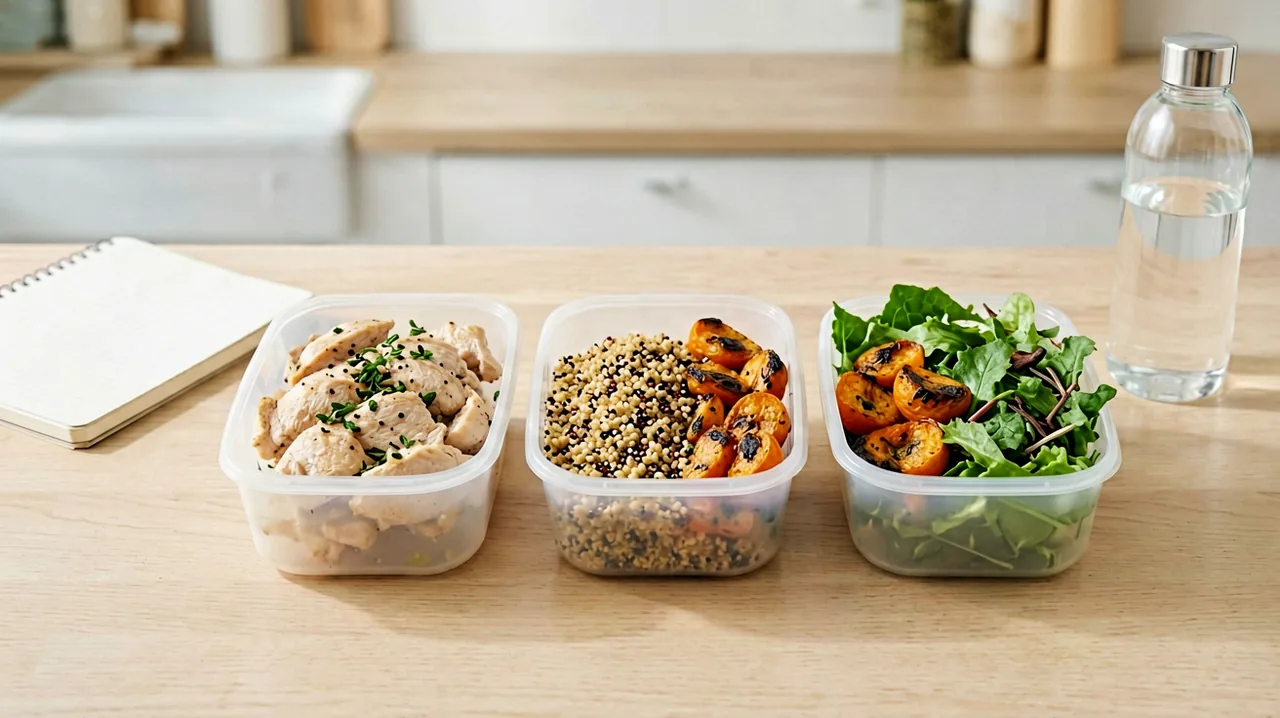
Meal prep does not need to mean eating the same meal every day. A flexible system prepares a few ingredients that can be mixed into different breakfasts, lunches, and dinners. This reduces decision fatigue while keeping maintenance meals practical.
The three-part prep system
- Prepare two proteins: chicken, turkey, eggs, tofu, tempeh, fish, beans, or lentils.
- Prepare two produce options: roasted vegetables, washed greens, fruit, or chopped salad vegetables.
- Prepare one flexible carbohydrate: oats, potatoes, rice, quinoa, beans, or whole-grain wraps.
Mix-and-match meal ideas
- Chicken, roasted vegetables, and quinoa with yogurt sauce.
- Tofu, edamame, greens, and rice with a light sesame dressing.
- Eggs, potatoes, spinach, and fruit.
- Lentils, chopped vegetables, feta, and whole-grain pita.
- Greek yogurt, oats, berries, and seeds for breakfast.
Portion without obsessing
Start with a moderate portion, eat slowly, and add more if needed. Use a kitchen scale only if it helps you learn portions; it is not required for every meal. Maintenance should support normal life, including restaurant meals, holidays, and social eating.
Storage and food safety
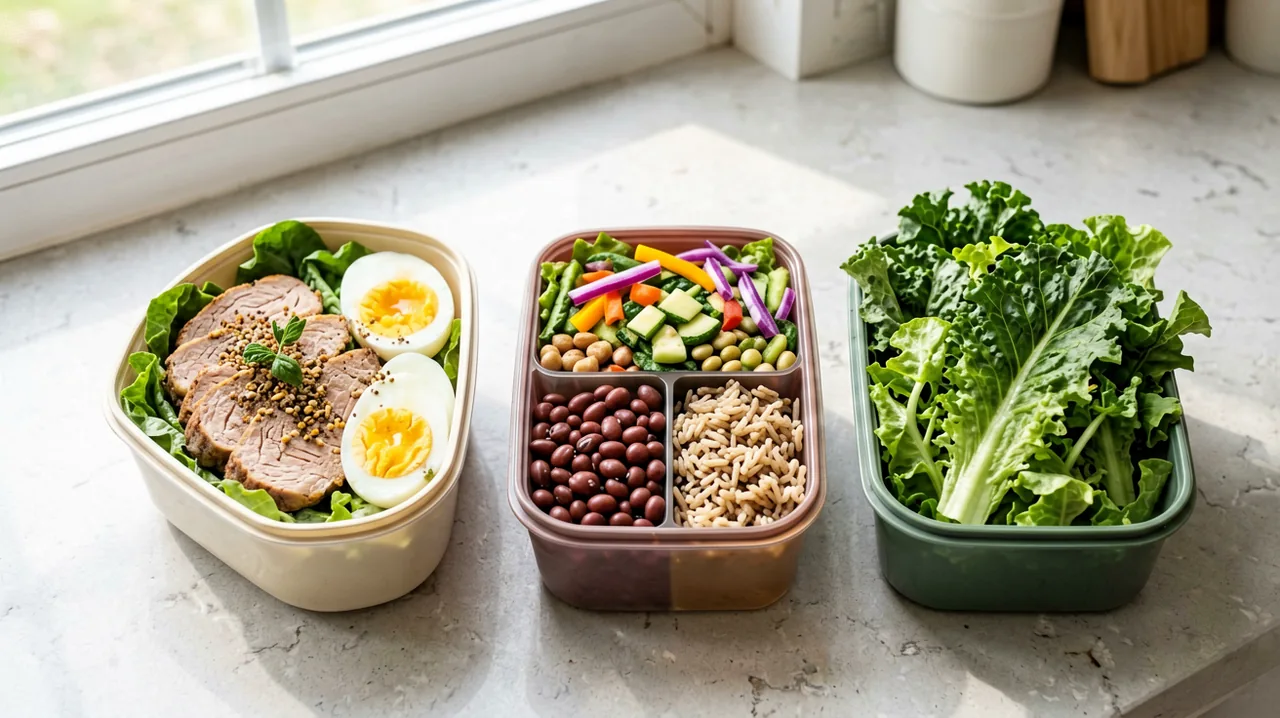
Cool cooked foods promptly, use clean containers, label dates, and follow local food-safety guidance. Keep refrigerated foods cold and reheat leftovers thoroughly. When in doubt, discard food that smells or looks unsafe.
A 30-minute weekly routine
Choose recipes, write a short grocery list, prepare proteins, wash produce, and portion two grab-and-go meals. Keep ingredients separate when that helps preserve texture and variety.
Use a repeatable prep workflow
- Plan: choose two breakfasts, two lunches, and two dinners that share ingredients.
- Shop: buy the proteins, produce, carbohydrate, and flavor ingredients required for those meals.
- Prepare: cook or portion proteins first, then wash produce and divide grains or legumes.
- Store: keep ingredients separate when you want more variety and label containers with dates.
- Assemble: combine ingredients in different ways through the week rather than following one fixed menu.
This workflow keeps prep focused on decisions that save time. It also leaves room for appetite and schedule changes. If one prepared food becomes unappealing, the remaining ingredients can still be used in a different bowl, wrap, salad, or snack.
Distribute protein across the day
Include a protein food at breakfast, lunch, dinner, and any snack that you actually need. A meal does not have to be large to contribute. Yogurt, eggs, tofu, beans, fish, poultry, cottage cheese, and fortified soy foods can all fit into different meal styles. Pair them with vegetables, fruit, whole grains, or potatoes so the plan remains varied.
Keep prep flexible for real life
Prepare one or two components that can be eaten cold, such as yogurt, beans, cooked chicken, or washed vegetables. Keep a shelf-stable backup for days when plans change. When eating out, use the same idea: choose a protein, add produce when available, and save or share a portion if it is larger than you want.
Make a weekly review
At the end of the week, note which foods were easy to use, which portions felt right, and what was wasted. Adjust the next grocery list accordingly. Meal prep improves through small changes, not through creating a perfect schedule on the first attempt.
Bottom line: The best maintenance meal prep gives you options. Prepare ingredients, not a rigid diet.